
Roofing is no longer limited to choosing between asphalt shingles, metal panels, or membrane materials. Newer roofing technology is changing how roofs manage heat, moisture, snow, wind, ventilation, and long-term maintenance.
For homeowners in Jamestown, NY, the most useful innovations are those that address real local conditions: freeze-thaw cycles, heavy precipitation, winter snow, ice formation, strong seasonal winds, and older housing stock. Some technologies are highly visible, such as solar panels or metal roofing. Others are built into the roof assembly and work quietly beneath the surface.
What counts as a roofing technology innovation?
A roofing innovation is any material, design method, monitoring system, or installation approach that improves a roof’s performance. The improvement may involve durability, energy efficiency, water control, safety, environmental impact, or maintenance.
Modern roofing developments include:
- Synthetic underlayments that resist tearing and moisture
- High-performance insulation and ventilation systems
- Reflective and solar-integrated roofing materials
- Stronger fasteners and wind-resistant installation methods
- Leak-detection sensors and remote monitoring
- Improved ice-barrier membranes
- Recycled, recyclable, and lower-impact roofing products
- Green roof systems for certain low-slope buildings
Not every new product is appropriate for every structure. Roof slope, framing, attic design, exposure, drainage, and local code requirements all affect whether a technology is suitable.
How are modern underlayments improving roof protection?
Synthetic underlayments provide a more consistent moisture-resistant layer beneath the roof covering than older felt products. They are generally lighter, less prone to wrinkling, and designed to remain stable during installation.
This layer matters because shingles or panels are not the roof’s only defense against water. Wind-driven rain, melting snow, and small gaps around penetrations can allow moisture beneath the outer covering. A properly installed underlayment helps protect the roof deck while the outer material sheds most of the water.
Ice-barrier membranes are especially relevant in cold-weather regions. They are installed in vulnerable areas such as eaves, valleys, and roof-to-wall transitions, depending on the roof design and applicable code. These membranes can help limit damage when ice buildup causes water to move beneath the roof covering.
They are not a substitute for proper attic insulation, ventilation, drainage, or installation. Ice dams often result from heat escaping into a cold roof area, so surface materials alone cannot solve every winter moisture problem.
Can roofing technology reduce heating and cooling costs?
Yes, but the result depends more on the complete roof assembly than on the outer covering alone. Insulation, air sealing, ventilation, roof color, material, and attic configuration all work together.
Newer insulation products can improve thermal performance in limited spaces. Some roofing systems also use reflective surfaces that absorb less solar heat during warm weather. This may be more noticeable in buildings with low-slope roofs, finished attic areas, or limited ceiling insulation.
In a cold climate, however, reflective roofing is only one consideration. A roof designed primarily to stay cool in summer still needs adequate insulation and air control for winter. Poorly sealed attic penetrations can allow warm air to reach the underside of the roof deck, increasing the risk of condensation and ice formation.
The practical question is not simply whether a material is “energy efficient.” It is whether the entire roof assembly manages heat and moisture appropriately for the building.
What role do solar roofing systems play?
Solar technology can be added above a conventional roof or integrated directly into roofing materials. Solar shingles and solar tiles are designed to produce electricity while forming part of the roof surface.
Integrated systems may have a cleaner appearance, but they can be more complex to repair or replace because the roofing and electrical functions are connected. Roof age is also a major consideration. Installing solar equipment on a roof that may need replacement soon can create additional costs and labor later.
Winter weather does not automatically make solar technology impractical. Solar systems can continue producing electricity during cold weather, and snow often slides or melts depending on roof pitch, surface temperature, and sunlight. However, snow cover can temporarily reduce production, and roof access for maintenance must be considered carefully.
Any solar installation also needs proper attachment, flashing, electrical protection, and structural review. The roof must be able to support the equipment and resist wind and snow forces.
Are metal roofs still improving?
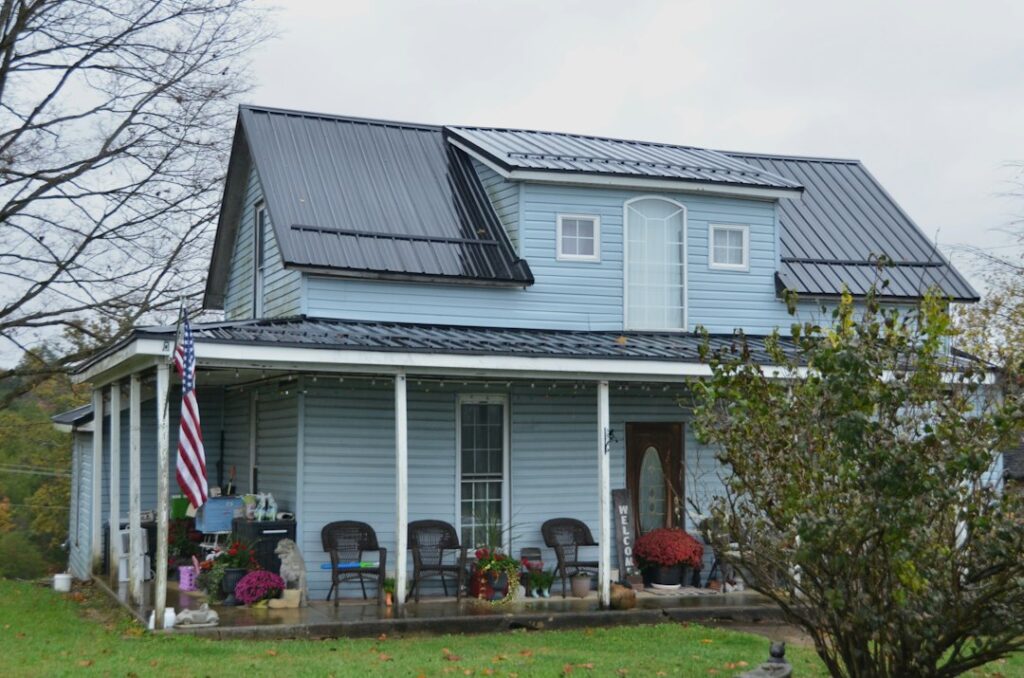
Metal roofing technology has advanced beyond the plain corrugated panels commonly associated with agricultural or industrial buildings. Modern systems can resemble shingles, slate, or standing-seam panels while offering strong resistance to wind, moisture, and repeated temperature changes.
The most important improvements are often found in the details:
- Concealed fasteners that reduce exposed penetration points
- Better protective coatings
- Factory-formed seams and flashing components
- Underlayments designed for metal roof movement
- Improved methods for handling expansion and contraction
Metal roofs can shed snow quickly, which may create a safety concern near doors, walkways, and lower roof sections. Snow guards or other design measures may be needed. A metal roof is not automatically maintenance-free, and improper installation can lead to noise, condensation, fastener problems, or leaks around penetrations.

How is technology helping detect roof leaks?
Some commercial and institutional roofs now use sensors that monitor moisture beneath roofing membranes. These systems can identify wet areas before water becomes visible inside the building.
Residential leak-detection technology is generally simpler. Devices may monitor attic humidity, temperature, or moisture near plumbing and roof penetrations. Smart home systems can send alerts when unusual conditions appear.
These tools are useful for early warning, but they do not replace inspection. A sensor may identify moisture without revealing whether the source is a roof leak, condensation, plumbing problem, or ice-related backup. The value is greatest when the information is interpreted alongside the roof’s design and weather conditions.
Are green roofs practical in this climate?
Green roofs use layers of waterproofing, drainage, growing medium, and vegetation. They can reduce stormwater runoff, protect the waterproofing layer from sunlight, and provide insulation benefits.
They are more common on low-slope commercial or institutional buildings than on typical pitched homes. A green roof adds substantial weight, especially when saturated with rain or covered by snow. The structure must be evaluated before installation.
Drainage is another concern. A green roof requires carefully designed outlets, overflow paths, root-resistant membranes, and regular maintenance. Without those features, trapped water can damage the roof assembly.
For most homes, simpler stormwater measures—such as properly sized gutters, downspout extensions, rain gardens, or rainwater collection—may be more practical than a vegetated roof.
What should homeowners ask before choosing a new roofing technology?
The newest material is not necessarily the best choice. Useful questions include:
- How will the system perform during freeze-thaw cycles?
- Can it handle the roof’s slope and snow exposure?
- Does the existing framing support the added weight?
- How will penetrations, valleys, eaves, and roof edges be detailed?
- Is the material compatible with the existing roof assembly?
- What maintenance will be required?
- Can individual components be repaired?
- Will the installation comply with current New York building and energy requirements?
- What happens if the product is discontinued?
A roof should be evaluated as a system rather than as a collection of unrelated products. The outer covering, underlayment, flashing, insulation, ventilation, drainage, and structure all affect performance.
Which innovations matter most for older homes?
For many older houses, the most valuable improvements are not highly visible. Better flashing, reliable underlayment, attic air sealing, insulation upgrades, balanced ventilation, and improved drainage can prevent more problems than an expensive specialty material.
Technology is most useful when it solves a known weakness. A roof with recurring ice dams may need attic and ventilation work. A roof with wind-damaged edges may need improved fastening and edge reinforcement. A roof with chronic moisture may need corrected flashing or ventilation rather than a different shingle.
The best roofing decisions are usually based on the building’s actual conditions, local weather exposure, expected service life, and repairability—not on novelty alone.
