
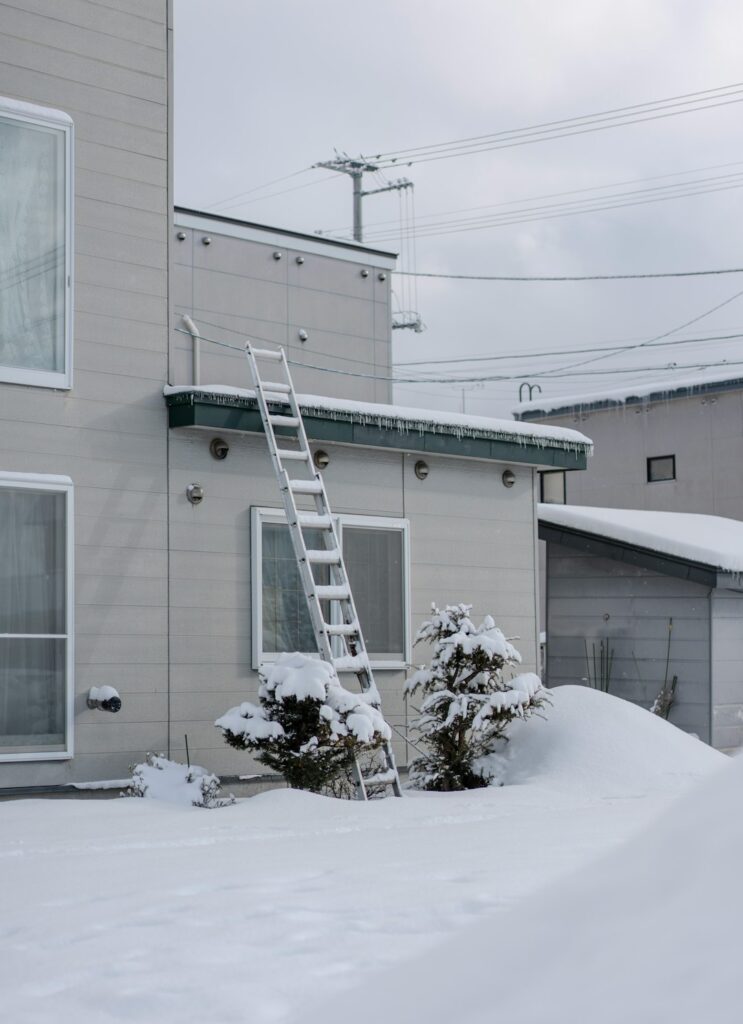
Hanging seasonal lights on a roof can be done safely, but the work deserves the same care as any other task involving ladders, electrical cords, and elevated surfaces. In Jamestown, NY, winter conditions can add snow, ice, wind, and early darkness to the usual risks. The safest approach is to plan the layout from the ground, use roof-friendly attachments, and avoid climbing onto a roof whenever possible.
Is it safe to hang lights directly on a roof?
Lights should generally be attached to roof edges, gutters, fascia, soffits, or nearby structures rather than fastened through shingles or other roofing materials. Nails, screws, staples, and improvised hooks can puncture the roof covering, damage flashing, or create paths for water to enter.
Use attachment methods designed for the specific location:
- Gutter or shingle clips for light strings along roof edges
- Fascia clips for the vertical trim behind the gutter
- Soffit or eave clips that grip without penetrating the material
- Removable outdoor clips for smooth, sound surfaces
- Plastic ties or clips for railings and other non-roof structures
Avoid forcing a clip beneath brittle shingles. Older roofing materials can crack, loosen, or lose granules when lifted. If an attachment will not fit easily, choose a different location rather than bending the roof covering.
Should anyone walk on the roof to install lights?
Usually, no. Roof walking increases the chance of slipping, damaging shingles, and falling from an edge. A roof may appear dry while holding frost, thin ice, or moisture that is difficult to see. Leaves, moss, loose granules, and steep slopes also reduce footing.
A long-reach pole designed for light installation can often place clips along lower roof edges from the ground. For higher areas, a properly positioned ladder may be safer than stepping onto the roof. Some roof designs, including steep slopes, multi-level sections, dormers, and areas above porches, are not appropriate for casual access.
Do not climb when:
- The roof, ladder, or ground is wet, icy, snowy, or visibly slippery
- Wind is strong enough to move the ladder or light strings
- You cannot maintain three points of contact
- The installation requires reaching sideways or leaning away from the ladder
- The roof edge is difficult to see from the ladder
- You are carrying bulky items while climbing
How should a ladder be used near gutters and roof edges?
Place the ladder on firm, level ground away from snowbanks, soft soil, and uneven landscaping. In winter, melting and refreezing can create unstable surfaces near walkways and foundation drainage areas.
The ladder should extend above the access point far enough to provide a secure handhold, and its feet should be kept clear of ice. Never place a ladder on boxes, buckets, stacked lumber, or other objects to gain height. Do not rest it against gutters unless the ladder and gutter system are specifically designed for that use; gutters can bend or pull away from the fascia.
Have another adult stabilize the ladder when practical, especially while attaching lights near an edge. Move the ladder instead of stretching beyond its safe reach. A fall can happen during a seemingly quick adjustment.
What type of lights are suitable for outdoor use?
Use lights specifically labeled for outdoor use and inspect the entire string before installation. Indoor-only lights may not have suitable insulation, weather resistance, or connectors for exposure to rain, snow, and freezing temperatures.
Check for:
- Cracked or split insulation
- Loose sockets
- Bent or corroded plugs
- Missing bulbs or damaged bulb seals
- Frayed sections near the plug
- Warm, discolored, or melted plastic
- Connectors that do not fit firmly
Discard damaged strings rather than repairing them with household tape. Replacement bulbs should match the type and rating specified for the string. Mixing incompatible bulbs can create excess heat or cause the string to operate improperly.
LED lights usually produce less heat than older incandescent strings and may place less load on an electrical circuit. That does not make damaged cords or overloaded outlets safe.
How can electrical hazards be reduced?
Connect outdoor lighting to a ground-fault circuit interrupter, commonly called a GFCI. This type of protection is designed to shut off power quickly when electricity begins flowing along an unintended path, such as through wet ground or a person.
Outdoor extension cords should be rated for outdoor use and sized appropriately for the total load. Keep connections elevated and protected from puddles, snowmelt, and areas where shovels or foot traffic could damage them. Do not run cords beneath rugs, through doorways that pinch them, or across walkways where they can become a trip hazard.
Avoid connecting too many strings end to end. Follow the maximum connection limits printed on the light packaging. Plugging several long strings into one outlet or power strip can overload the circuit, especially if other seasonal equipment is using the same circuit.

Turn lights off before going to bed or leaving the house unless an appropriate automatic timer or control is being used. A timer also reduces the chance that lights will remain on during changing weather conditions.
Can lights be attached to gutters?
Yes, lightweight outdoor light strings can often be attached to gutters with clips made for that purpose. The clips should distribute the weight without pulling the gutter out of alignment.
Do not hang heavy decorations, multiple dense light strands, or large illuminated figures from a gutter. Gutters are designed to carry rainwater, not substantial suspended loads. Extra weight can loosen hangers, distort the gutter slope, or place stress on the fascia board.
Keep light strings from blocking downspouts. If water cannot drain properly, freezing may create an ice buildup that adds weight to the gutter and sends water behind the fascia or onto walkways.
What should be done after snow, ice, or strong wind?
Inspect the installation after significant weather. In the local winter climate, snow and ice can add weight quickly, while wind can pull clips loose or shift cords into unsafe positions.
From the ground, look for:
- Sagging strings
- Detached clips
- Cords rubbing against sharp edges
- Ice buildup around gutters or connectors
- Lights hanging near power lines
- Snow sliding from roof sections onto the installation
Do not knock heavy ice from lights while standing underneath. Falling ice can cause injury and may damage the light string, gutter, siding, or roof edge. Do not climb onto an icy roof to make adjustments.
If a string is damaged, flickering, unusually warm, or repeatedly tripping the GFCI, disconnect it and leave it out of service.
What areas should be avoided completely?
Keep lights, ladders, poles, and extension cords away from overhead electrical lines. Even an object that does not appear to touch a wire can conduct electricity if it gets close enough under the wrong conditions.
Avoid attaching lights to:
- Chimneys or flues that become hot
- Vents where heat or moisture is discharged
- Roof sections with loose or missing shingles
- Areas with visible leaks or sagging gutters
- Metal components that are energized or poorly grounded
- Trees or branches that could fall onto the roof or wiring
- Snow guards, antennas, or other equipment not designed to support added weight
The safest installation is one that keeps people on the ground, avoids roof penetrations, uses outdoor-rated electrical equipment, and can be removed without damaging the roofing system. If the layout requires roof access, work near electrical lines, or involves unstable roofing, the risk is greater than the decoration is worth.
